Built specifically for radiation therapy patients — and matched to where you are in treatment.
android Android users: please use the Google account email you'll use to download the app.
Created by a PA-C specializing in radiation oncology · Informed by 90+ clinical trials · iOS & Android · Free to start
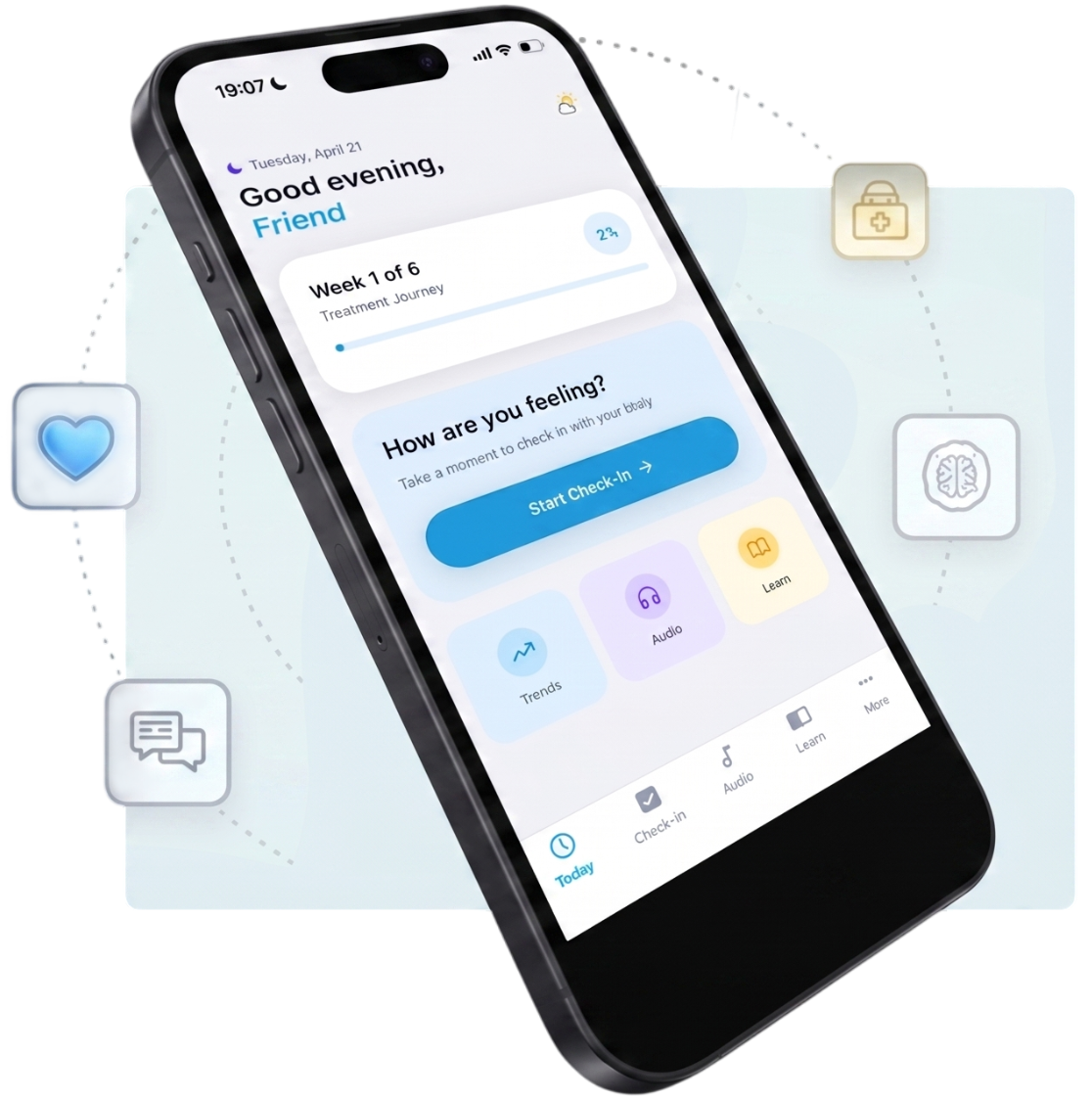
Radiation therapy changes week by week. Support should too.
New routines, new questions.
Many patients feel surprisingly normal at first.
The cumulative effect is beginning to show.
Symptoms often peak here. This is expected — and temporary.
Relief and anxiety often coexist.
Symptoms may worsen before they improve.
TRACK
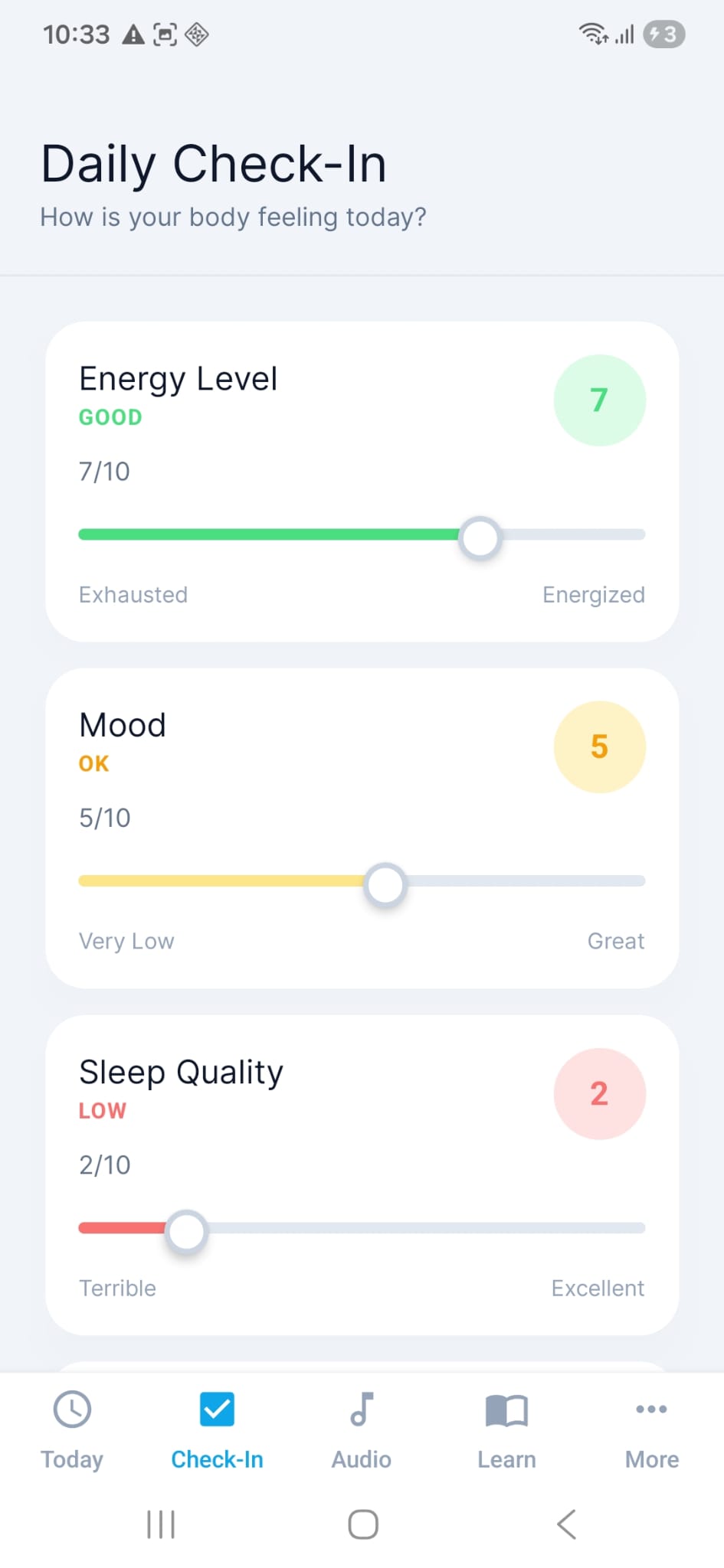
Track energy, skin, pain, mood, and sleep in about 30 seconds a day.
LISTEN
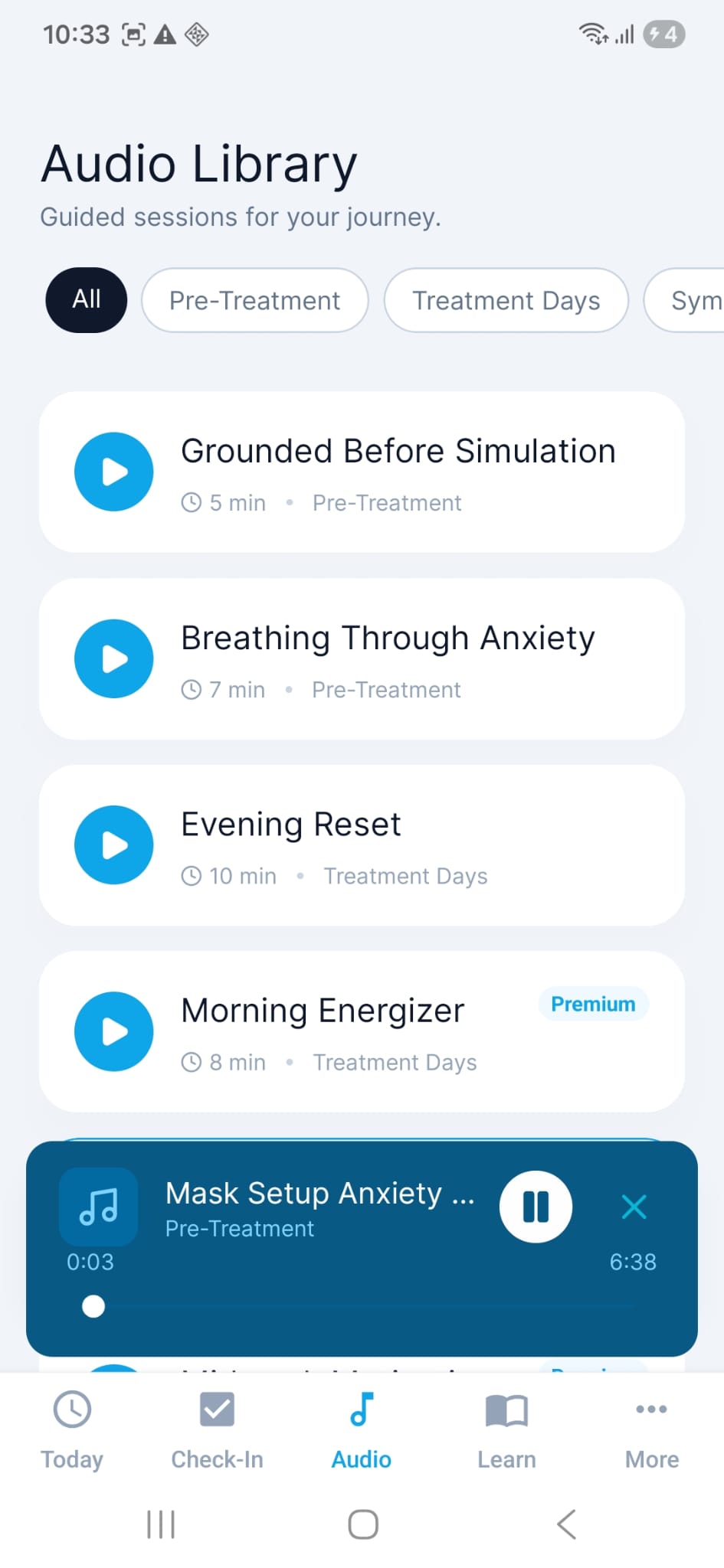
12 guided sessions for mask immobilization anxiety, fatigue, sleep, and waiting room stress.
LEARN
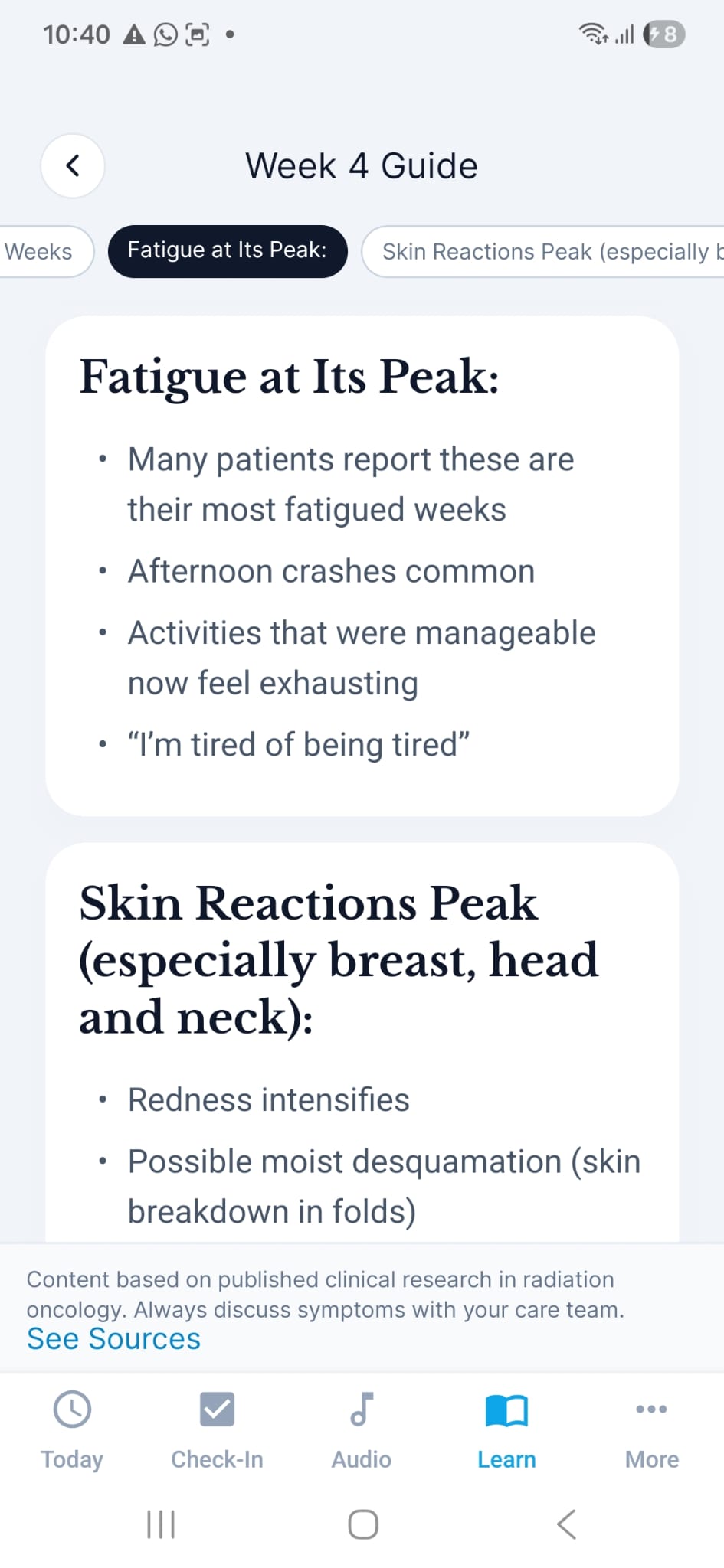
Week-by-week guidance so you always know what's normal — and what's next.
Track symptoms, find support, and understand what's next — all in one place.
Daily Check-In
30 seconds. Five symptoms. No typing required.
Audio Library
12 RT-specific sessions for mask immobilization anxiety, fatigue, sleep, and waiting room stress.
Weekly Guides
You're in the hard part. Here's what's normal this week — and what's coming next.
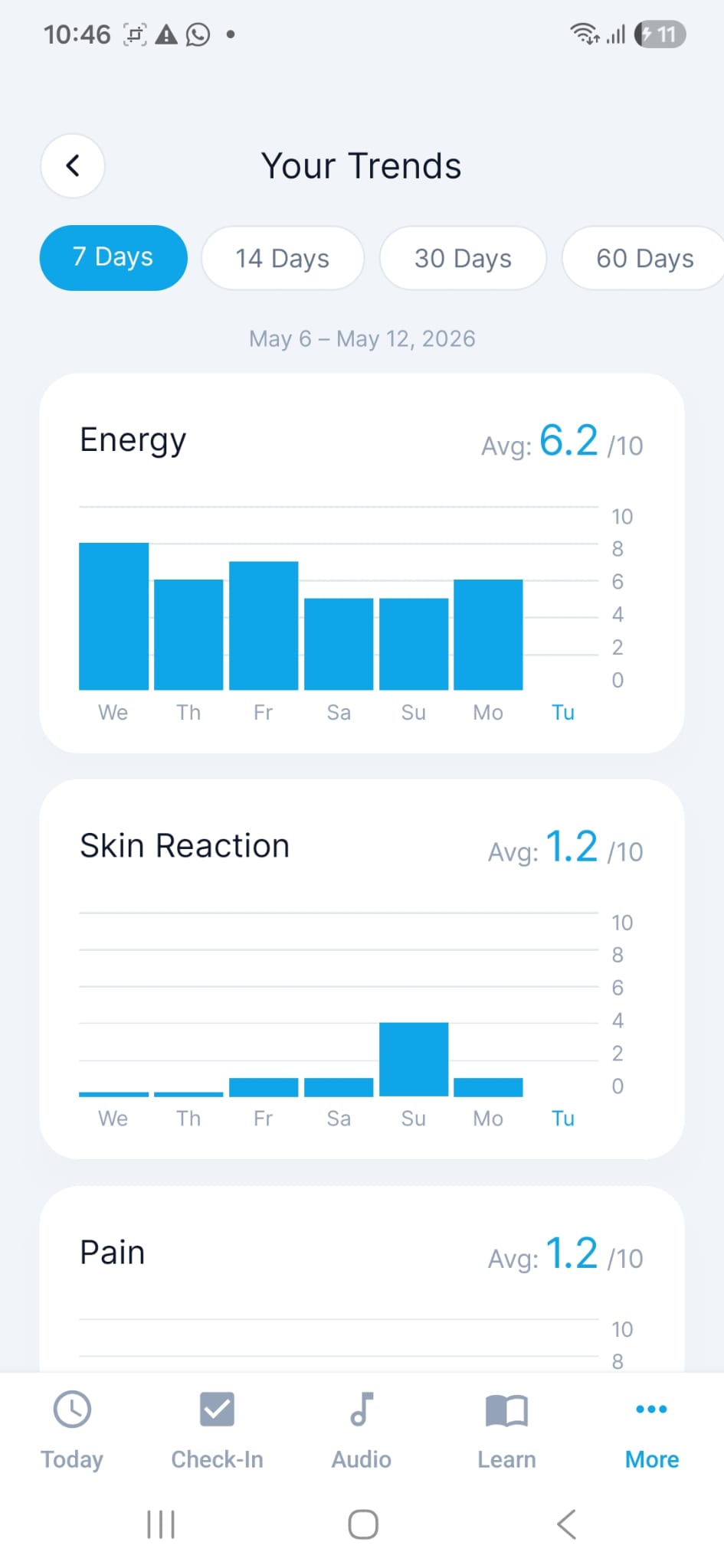
Symptom Trends
See how symptoms change week by week — and export trends for your next appointment.
Available on iOS and Android. Free to start.
Whether you're being treated for breast cancer, a brain tumor, head and neck cancer, prostate cancer, or something else entirely — radiation therapy shares a common arc. Radiant is built around that arc.
Before treatment starts
Radiant orients you to the weeks ahead — so the arc doesn't catch you off guard.
Early in treatment
Radiant tracks what's changing and tells you what to watch for as treatment continues.
In the harder weeks
Radiant helps you understand that this is expected — and gives you evidence-informed tools for the hardest stretch.
After treatment ends
Radiant supports the recovery period — including the weeks when symptoms may still be present and the structure of daily treatment has ended.
Wherever you are in treatment, Radiant helps you understand what's normal, what may help, and what's next.
If you're receiving radiation therapy, Radiant was built for you.
Radiant's educational content isn't drawn from wellness industry convention or general cancer guidance. It's synthesized from a review of more than 90 clinical trials examining non-pharmacological, supportive care interventions for radiation therapy symptom management — across key domains including fatigue, anxiety, sleep, and pain.
When Radiant delivers a tip for pre-treatment anxiety or guidance for sleep disruption in week 3, that recommendation is grounded in published clinical research in radiation oncology — not generic wellness advice.
Research on electronic patient-reported outcomes in oncology has shown that systematic symptom tracking can help surface problems earlier and support better care. Radiant is built around that same core behavior: daily check-ins become exportable trend data patients can bring to their next appointment, giving their care team a clearer picture of what has been happening between visits.
Seminars in Radiation Oncology
Supporting research has been accepted for publication in Seminars in Radiation Oncology, a leading peer-reviewed journal in radiation oncology, with publication expected in 2026.
Radiant is educational support — not medical advice — and is designed to complement your radiation oncology team, not replace it.
David Astaphan, PA-C — Physician Associate specializing in radiation oncology
I've watched the same pattern repeat: my patients left appointments with a plan and a care team. But as the weeks went on and fatigue built and questions multiplied, they were navigating the hardest part largely on their own — between appointments, without anyone to tell them what was normal.
My interest in oncology isn't only professional. Both my mother and my aunt are breast cancer survivors. I know what it means to watch someone you love move through a diagnosis and wish there was more support in the spaces between appointments.
Radiant is the tool I wished my patients already had.
David Astaphan, PA-C
Physician Associate in Radiation Oncology
Start free. Upgrade only if you want fuller support through treatment and recovery.
Real support from day one.
Free to download. Always.
Support through treatment and recovery.
One-time purchase · Never renews
Everything in Free, plus:
Full access, month by month.
Cancel anytime
Everything in Free, plus:
Both paid plans unlock the full Radiant experience. Choose the payment structure that fits you best.
Facts, assets, and contact information for journalists, podcasts, and partner organizations.
~800,000
people in the U.S. receive radiation therapy each year.
90+
clinical trials informing Radiant's educational content.
12
RT-specific guided audio sessions.
26
symptom-triggered, evidence-informed tips.
Supporting research has been accepted for publication in Seminars in Radiation Oncology, with publication expected in 2026.
About Radiant RT
To our knowledge, Radiant RT Symptom Support is the first app built specifically for radiation therapy patients. Created by David Astaphan, PA-C — a Physician Associate specializing in radiation oncology — Radiant provides daily symptom check-ins, week-by-week treatment guidance, and 12 RT-specific guided audio sessions, all matched to radiation therapy's predictable symptom arc. Its educational content is grounded in a review of more than 90 clinical trials, with supporting research accepted for publication in Seminars in Radiation Oncology. Available on iOS and Android. Free to start.
A few questions patients, caregivers, and clinicians often have before getting started.
No. Radiant is an educational support tool grounded in published clinical research. It does not diagnose, treat, or prevent any condition. Always discuss symptoms and treatment decisions with your radiation oncology team.
Not at all. Radiant is designed to complement your radiation oncology team — not replace it. It supports you during the hours between appointments, when questions arise and your team isn't immediately available. Your radiation oncology team remains your primary source of medical guidance. Radiant is the support that exists alongside them.
As early as possible — ideally before or at the start of treatment. Starting early lets you establish a baseline before the cumulative effects of radiation begin to build. If you're already in the middle of treatment, it's not too late. Weeks 4–5 are often the hardest stretch, which makes Week 3 an ideal time to start tracking symptoms and accessing week-by-week guidance for what's ahead. Radiant is also useful in the weeks after treatment ends, when symptoms may still be present and daily appointments are gone.
Radiant is available on iPhone and Android.
Yes. Radiant does not sell your data. Any symptom information you choose to track is private to you unless you decide to export or share it. Full details are available in our Privacy Policy.
The free version includes daily symptom check-ins, the first two weeks of treatment guides, and 3 guided audio sessions — real support at no cost. Paid access unlocks the full experience: all 12 audio sessions, week-by-week guides through every stage of treatment including weeks 4–5 and post-treatment recovery, up to 2 evidence-informed tips per day, symptom trend tracking, and visit-ready PDF exports for your care team. Available as a one-time One-Year Treatment Pass ($49.99 — never renews) or Monthly Access ($7.99/month).
Still have questions? Reach out at david@radiantrtapp.com
Get launch updates for the first app built specifically for radiation therapy patients.
androidAndroid users: please use the Google account email you'll use to download the app.
Currently in beta testing with radiation therapy patients. Public launch coming soon on iOS and Android.
The support that exists between your appointments.
Healthcare provider? Learn how to recommend Radiant to your patients →